
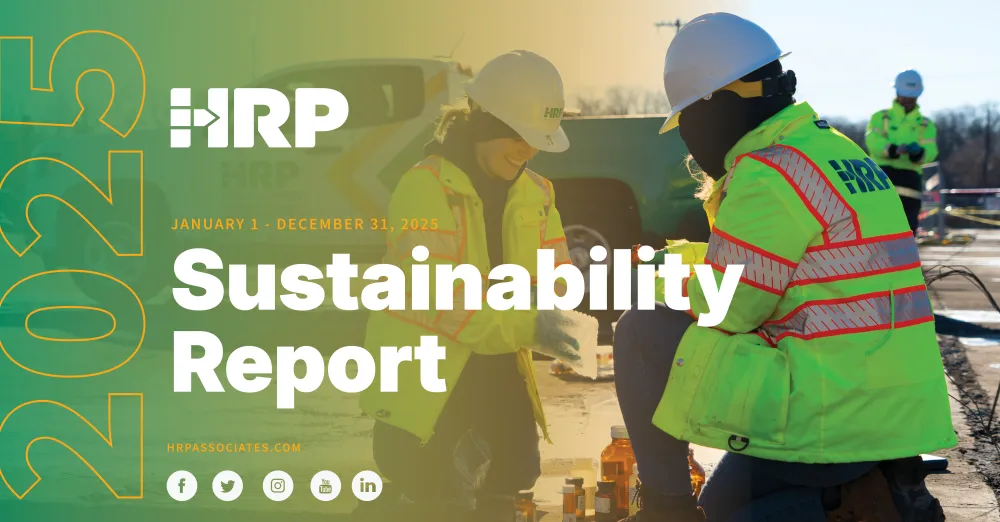
HRP’s 2025 Sustainability Report is Here: Here’s What We’ve Done over the Last Year
May 4th, 2026



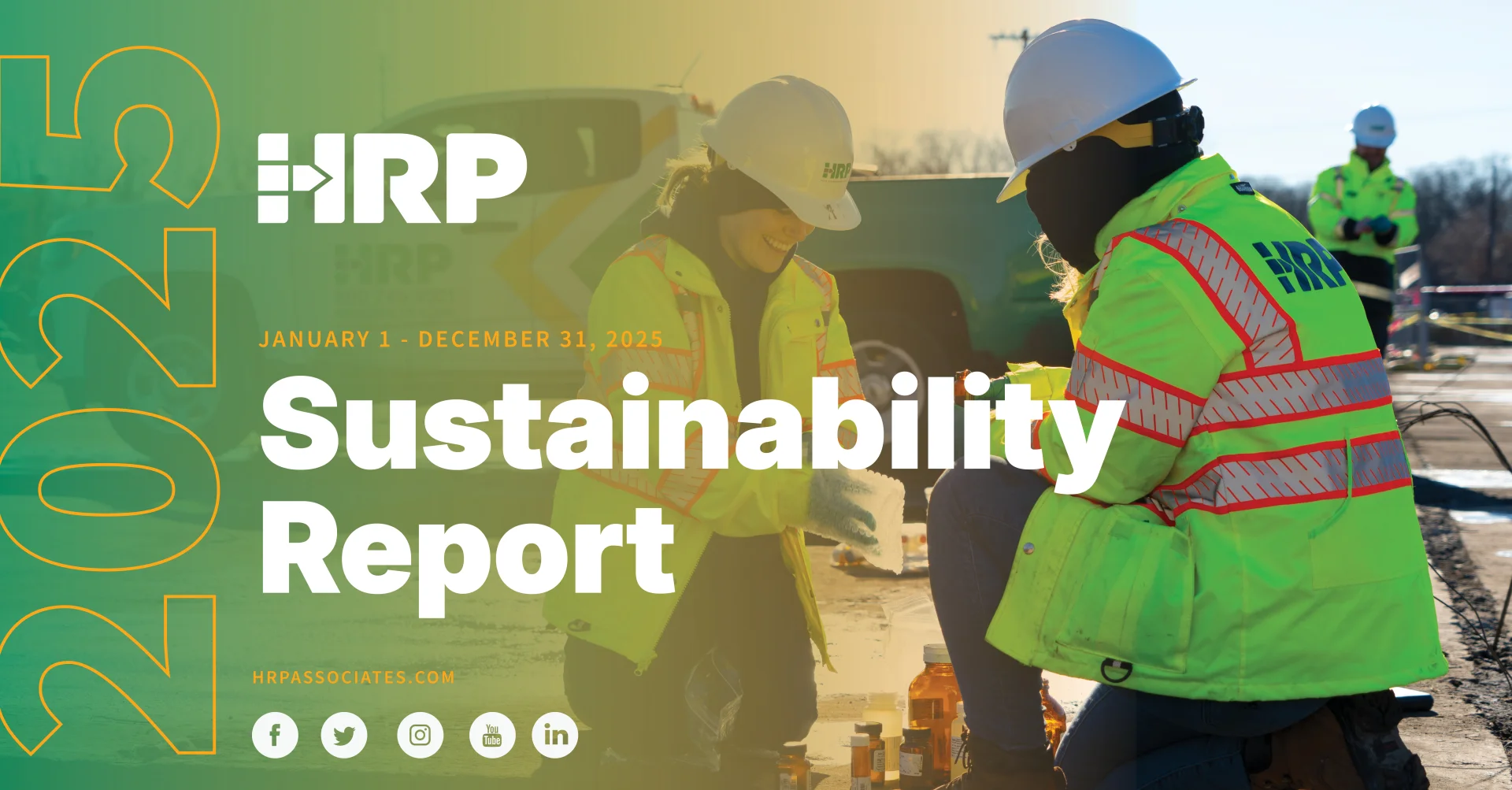
When people hear the phrase “sustainability report,” it’s likely that they immediately picture dense charts, corporate jargon, and enough acronyms to make any coffee they’ve poured go cold before page three.
But with HRP’s 2025 Sustainability Report, we set out to tell a different kind of story.
Yes, there are metrics. Yes, there are frameworks and reporting standards and all the things you would expect from a company that spends its days helping clients navigate environmental and compliance challenges. But underneath all of that is something we believe is much more human: a close look at how a company tries to grow responsibly while still doing meaningful work in the real world.
For HRP, sustainability is not boxed into one department or one annual initiative. It shows up in project planning, employee training, safety programs, community engagement, and even the way the company works with vendors and subcontractors. We wanted the report to paint a picture of sustainability as something woven into everyday operations and frame it as a process — one that involves figuring out where the company can make the most material impact over time. That mindset runs throughout the report, starting with the materiality assessment that acts as our compass, and navigating through our sustainability improvement plan and the long-term tracking of key performance indicators.
“Our Sustainability Report is based off of what we’ve identified as material to our organization and what we’re focusing on,” said Jackie Baxley, Principal and EHS&S Practice Leader at HRP. “We completed a materiality assessment that took a whole series of topics and placed them into Elevate, Monitor, and Maintain categories. That framework helps guide where HRP directs its attention and resources over the next several years.”
The top priorities weren’t flashy. Stakeholders ranked ethical business practices, accountability, employee development, data security, customer confidentiality, and subcontractor and vendor relationships among the most important focus areas. In other words, the fundamentals still matter. A lot.
Our Sustainability Report also highlights something easy to overlook in conversations about sustainability: people.
HRP invested more than 11,000 hours into professional development training in 2025, averaging 81 hours per employee — more than double the company’s stated goal. Programs like HRP 101, the newly launched HRP 201, and the Career Advocacy Program (CAP) are designed to support employees at different stages of their careers, from brand-new hires to early-career professionals looking for direction and mentorship.
The report is also grounded in internationally recognized sustainability frameworks, though HRP’s approach is intentionally practical.
“We model our Sustainability Program off of two standards: the United Nations Sustainable Development Goals (UN SDGs) and the Global Reporting Initiative (GRI),” Jackie says.
The UN SDGs provide broad global sustainability goals, while the GRI framework helps organizations report progress with transparency and consistency.
“We’ve taken the UN SDGs, these international goals, and localized them,” Jackie says. “We’ve identified the ones that are meaningful to us, and what we can measure and report. For instance, when it comes to ending global hunger, we’ve looked at what we can do, which includes hosting more food drives. In other words, we are applying the saying, ‘think globally, act locally.’”
HRP continued tracking greenhouse gas emissions in 2025 while also beginning the groundwork for identifying Scope 3 emissions — one of the more complex pieces of climate reporting because it involves impacts throughout a company’s broader value chain. The company also continued efforts related to water use, energy monitoring, recycling, and environmental compliance across its offices.
Instead of speaking broadly about sustainability, we showed — through the inclusion of project spotlights — what it looks like in practice: restoring contaminated wetlands, helping communities address groundwater impacts, supporting brownfield redevelopment projects, and assisting with safe reuse of industrial facilities. These are examples of environmental work intersecting directly with public health, infrastructure, and community planning.
We believe that’s what makes the report worth reading. It’s not simply a collection of sustainability goals. It’s a snapshot of how a company is trying to operate thoughtfully while balancing environmental responsibility, employee investment, governance, safety, and long-term growth.
Request A Copy of our 2025 Sustainability Report


 Login
Login


