Our Work at Wesleyan, PT. II – Bringing RLT into the Mix
February 8th, 2026




As we've detailed in a recent blog, HRP is helping close out a complex, decades-long environmental cleanup by pairing remediation with ecological restoration at Wesleyan University’s Long Lane property in Middletown, Connecticut. The site-wide investigations and remediation efforts have been addressing legacy impacts, with key challenges including widespread coal ash fill and a pond and wetlands that were impacted by historic pesticide use, along with the presence of a low-functioning, coal-ash-impacted dam.
Working closely with regulators, HRP designed a solution that met cleanup standards while restoring natural systems—removing the dam, reestablishing the original stream channel, and converting the former pond to upland to safely relocate certain impacted soils on site.
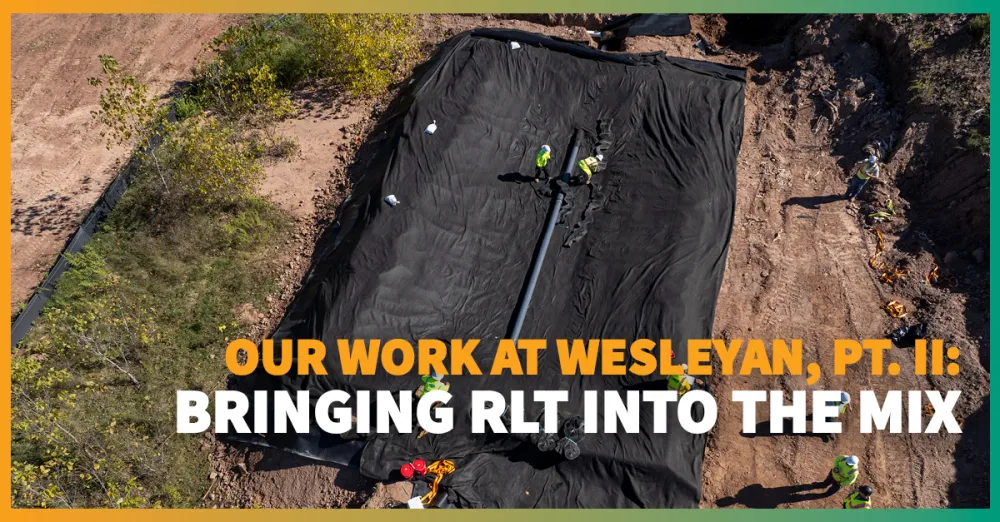
Projects like the one at Wesleyan also create opportunities to apply emerging remediation technologies. HRP and Next Earth Environmental’s Rapid Leaching and Dewatering Technology (RLT), originally developed for PFAS-impacted soils, mobilizes contaminants from soil into a liquid phase where they can be efficiently treated and removed. Using lined, watertight containment cells constructed with geomembranes and geosynthetic clay liners, soils are fully saturated and then rapidly dewatered through a patented filtration and drainage system.
The collected leachate is routed to a closed-loop, site-specific wastewater treatment system designed based on performance data, allowing for effective treatment and ultimate destruction or disposal of contaminants. Just as importantly, RLT is highly scalable—capable of managing weekly throughputs ranging from under 100 cubic yards to well over 1,000—and can deliver significant cost savings compared to traditional excavation and disposal at landfills by minimizing off-site transport and waste volumes.
While RLT was engineered with PFAS in mind, the same principles apply to complex legacy soil contamination like Long Lane. HRP’s work at Wesleyan and the continued advancement of technologies like RLT reflect a shared goal: smarter, cleaner, and more sustainable solutions that restore land, protect communities, and move environmental projects forward.


 Login
Login


